
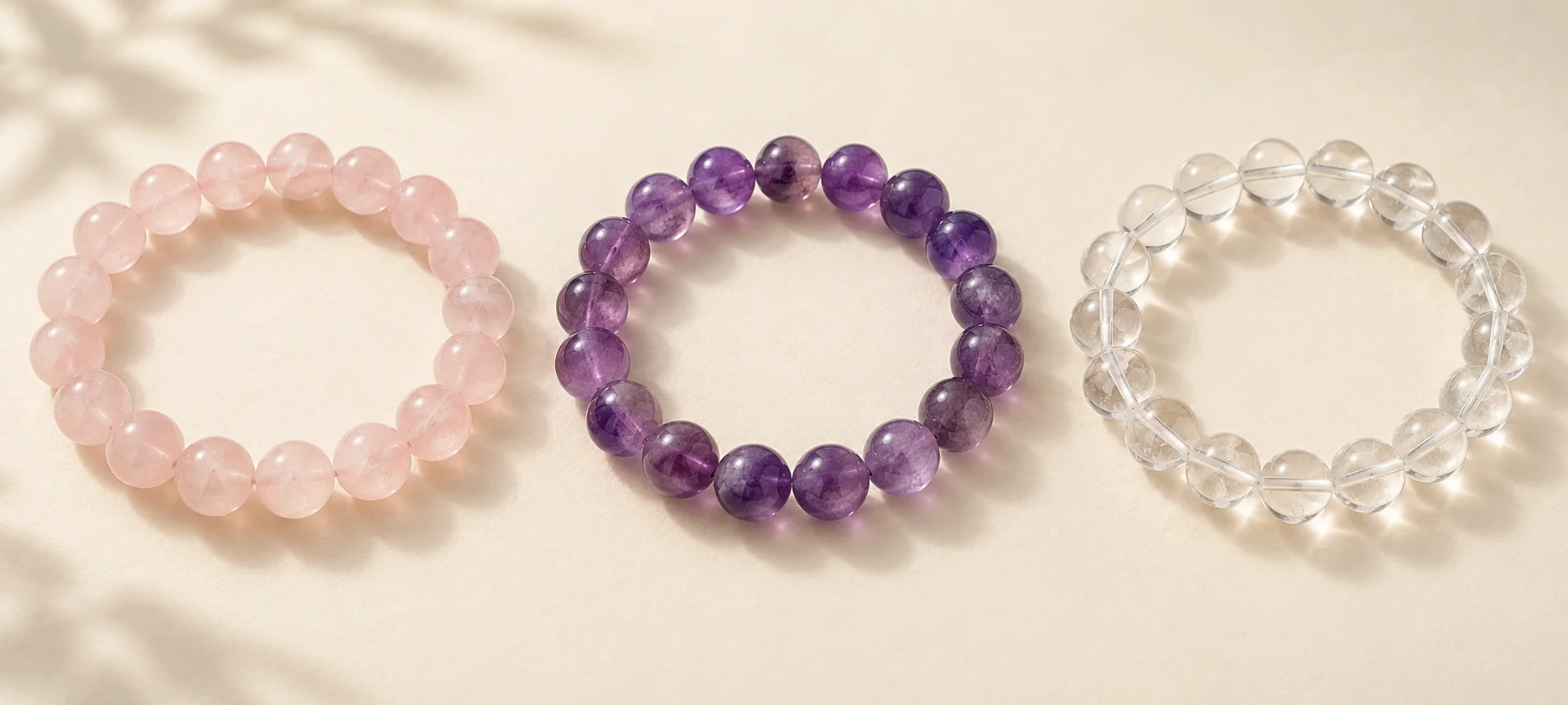
A first crystal bracelet is an awkward thing to shop for online. Two strands can look almost identical in their photographs and carry very different prices. Zooming in does not always help: one seller shows every bead under bright light, while another photographs the bracelet from across a table.
For a first purchase, I would spend more readily on a color I prefer and a fit I understand than on a larger bead.
Set a limit before browsing
Choose an amount you would be comfortable spending on an everyday accessory. You do not have to use all of it.
If you have set aside US$50 and find a US$35 bracelet you like, compare it with the more expensive options. Look for something specific that you prefer in them. Perhaps the purple is more consistent across the strand, or the seller offers a length that fits your wrist better. If you cannot identify a difference you care about, stay with the less expensive piece.
These figures are spending examples, rather than price bands for particular qualities. A budget alone cannot tell you what grade of beads you will receive.
Put comparable bracelets side by side
Start with the same stone and bead diameter. An 8mm amethyst strand and a 10mm aquamarine strand give you too many differences to untangle at once.
Then check the details that are easy to miss in a photograph:
Size: bead diameter, bracelet length, and the wrist measurement the seller recommends.
Materials: the stated stones, disclosed treatments, and any metal components.
Photographs: whether you are looking at the actual bracelet or an example of the design.
Total cost: delivery charges and return terms.
For a mixed-stone bracelet, check how much of each material it contains. A strand with two aquamarine accents is a different comparison from one made mostly of aquamarine.
Design, packaging, and service also contribute to a retail price. A gift box might be useful when you are sending a present. For your own everyday bracelet, you might prefer to put that money toward a different bead selection. Check what is included before attributing the entire price difference to the stones.
With amethyst, look at the purple first
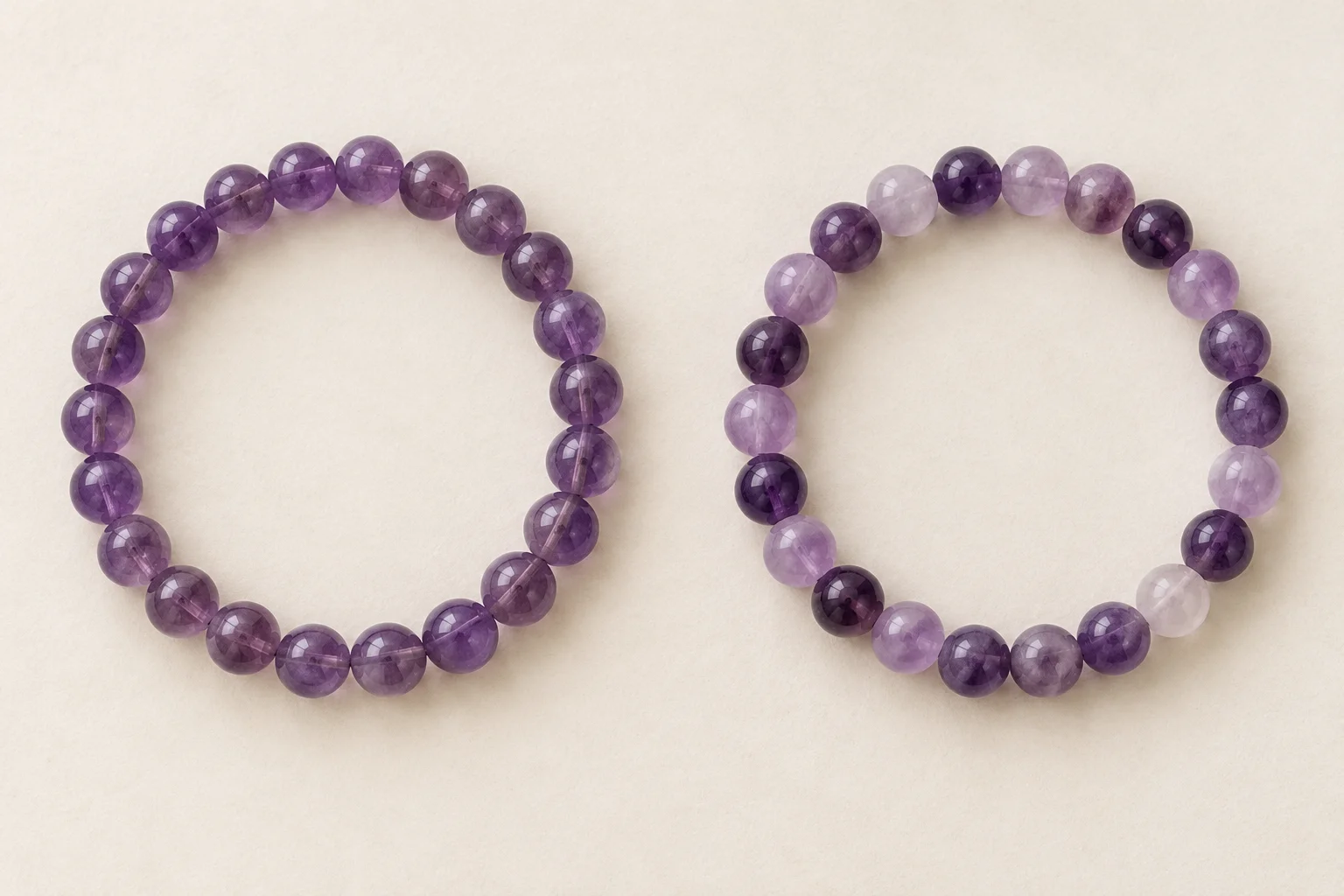
A very clear strand can still look pale or uneven. Before zooming into individual beads, look at the bracelet at roughly the size you would see it on your wrist.
GIA’s amethyst guide gives considerable attention to color, including its strength and distribution. It also notes that beads combining fine color with high clarity command a premium.
For a mostly uniform purple bracelet, one noticeably pale bead would make the strand feel unfinished to me, even if the surrounding beads looked good. I would be happier with a gradual shift from pale lavender to deep purple, where the variation feels deliberate.
Rose quartz calls for a different expectation. Its familiar soft, cloudy appearance comes from microscopic inclusions, as GIA explains in its rose quartz description. That cloudiness alone does not make a strand poor quality. More transparent examples exist too, so compare the pink, translucence, and overall appearance of the pieces in front of you rather than applying one clarity rule to every stone.
Check the parts that close-ups leave out
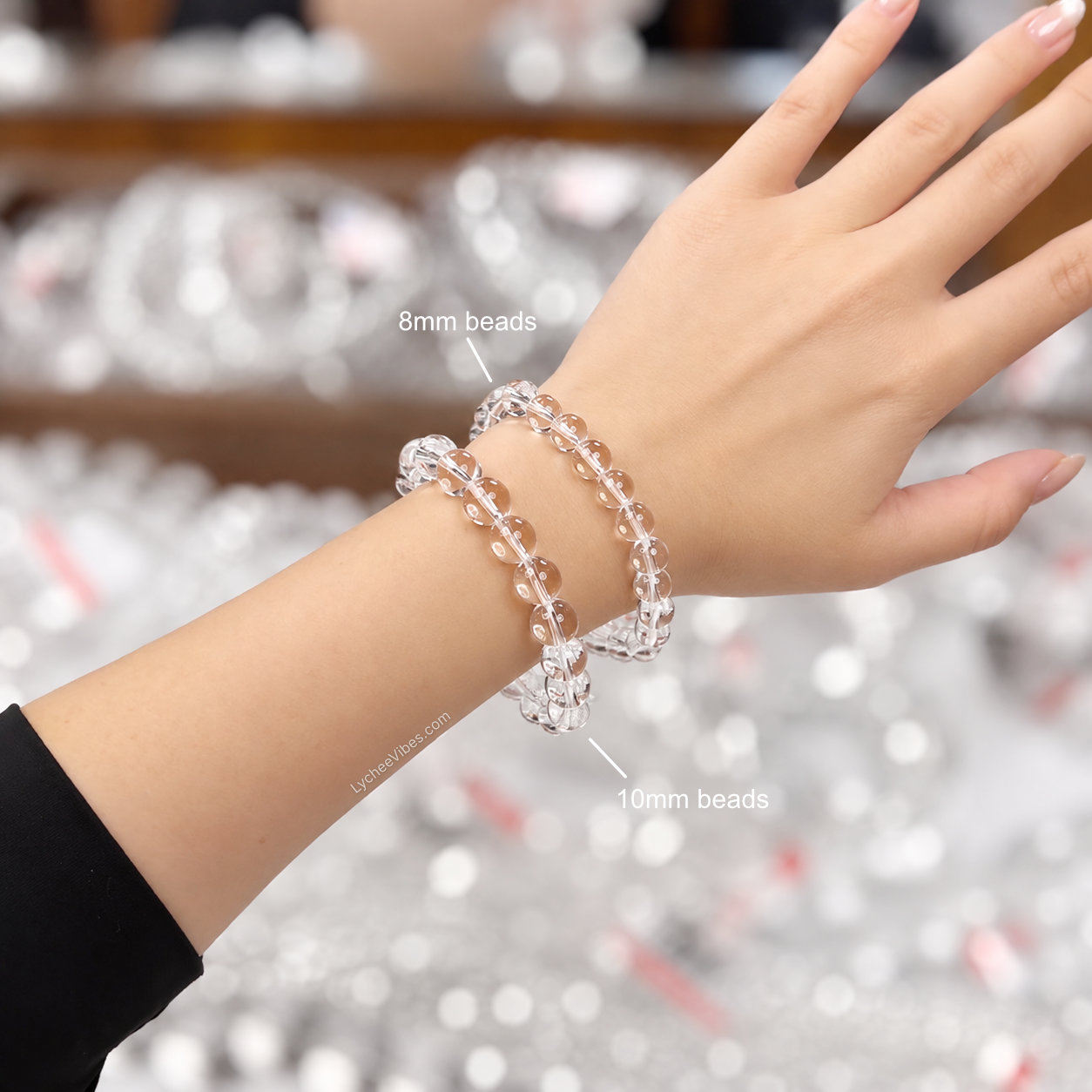
An enlarged photograph tells you little about whether you will enjoy wearing 10mm beads at a desk or beside a watch. Ask for a wrist photograph with the bead diameter stated. A side-by-side image of two sizes is even more useful. For a closer comparison, see our bracelet bead size guide.
Think about where the bracelet will sit during an ordinary day. If you type often or wear a watch on the same wrist, consider how much space you want the beads to occupy. A size that looks striking in a photograph may feel more noticeable than you want for daily wear.
Pay attention to how the seller describes fit. “Bracelet length” and “suitable wrist size” are different measurements; ask which one the listing provides. Give the seller your measured wrist circumference and say whether you prefer a close or loose fit.
Next, look around the drill holes and along the bead edges for visible chips or roughness. On a faceted bracelet, check that you actually like the shape and finish. Extra facets are not, by themselves, a reason to pay more.
If the higher price is being explained as better workmanship, the seller should be able to describe what has been done differently.
Try the color against clothes you already own
Open the bracelet photograph beside a picture of an outfit you wear often. A cream shirt gives pale pink a different setting from a black sleeve; purple beside gray knitwear creates another combination.
I would do this before trying to classify my skin as warm or cool. Your usual clothes, watch, and rings give you a much more concrete starting point.
With mixed colors, notice the proportions. A few pink beads in a mostly blue bracelet create a different effect from equal amounts of pink and blue. If one detail caught your attention in the product photo, check whether it will still be noticeable when the bracelet is worn.
Ask for one more view before ordering
If the listing leaves you uncertain, send a short, specific message:
My wrist measures ___, and I prefer a slightly loose fit. Which size would you suggest? Does the photo show the bracelet I will receive, and are there any known treatments? Could you send a short video in indirect daylight?
The video is for judging appearance. It will not establish whether a stone is genuine. If a laboratory report is part of the offer, check who issued it, what was tested, and how it relates to the bracelet you are buying. Avoid flame or scratch tests at home; they risk damaging the piece.
When two bracelets are still close contenders, ask for a photograph of both under the same light. That gives you a better chance to compare the shade and consistency of the beads directly. If the extra cost buys a color you clearly prefer or a fit that suits you, you have a reason to pay it. If you still cannot see why you want the more expensive one, leave it there.