
Table of Contents
Why Crackle Quartz looks the way it does — and how to care for it.
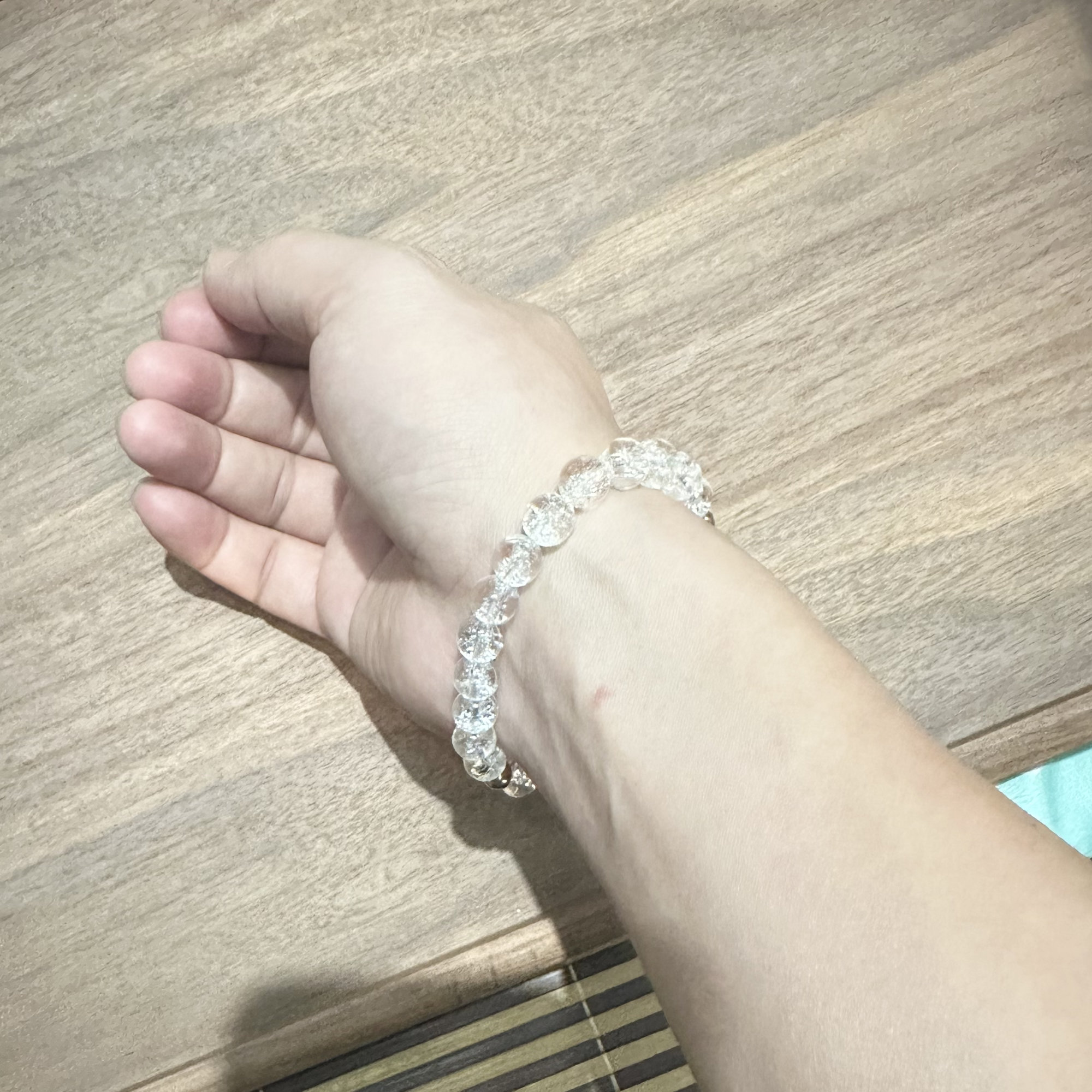
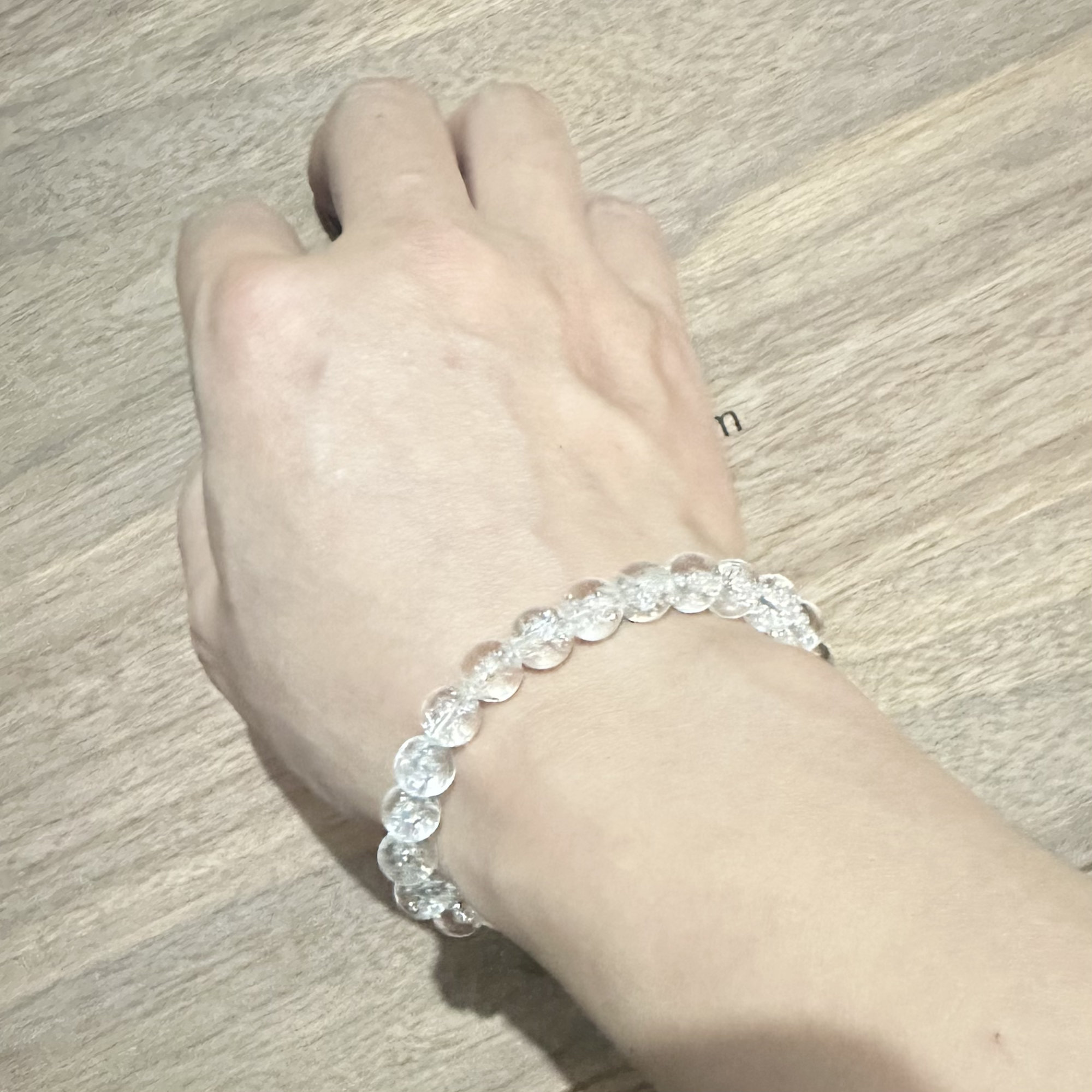
Crackle Quartz has a distinctive look that is hard to miss.
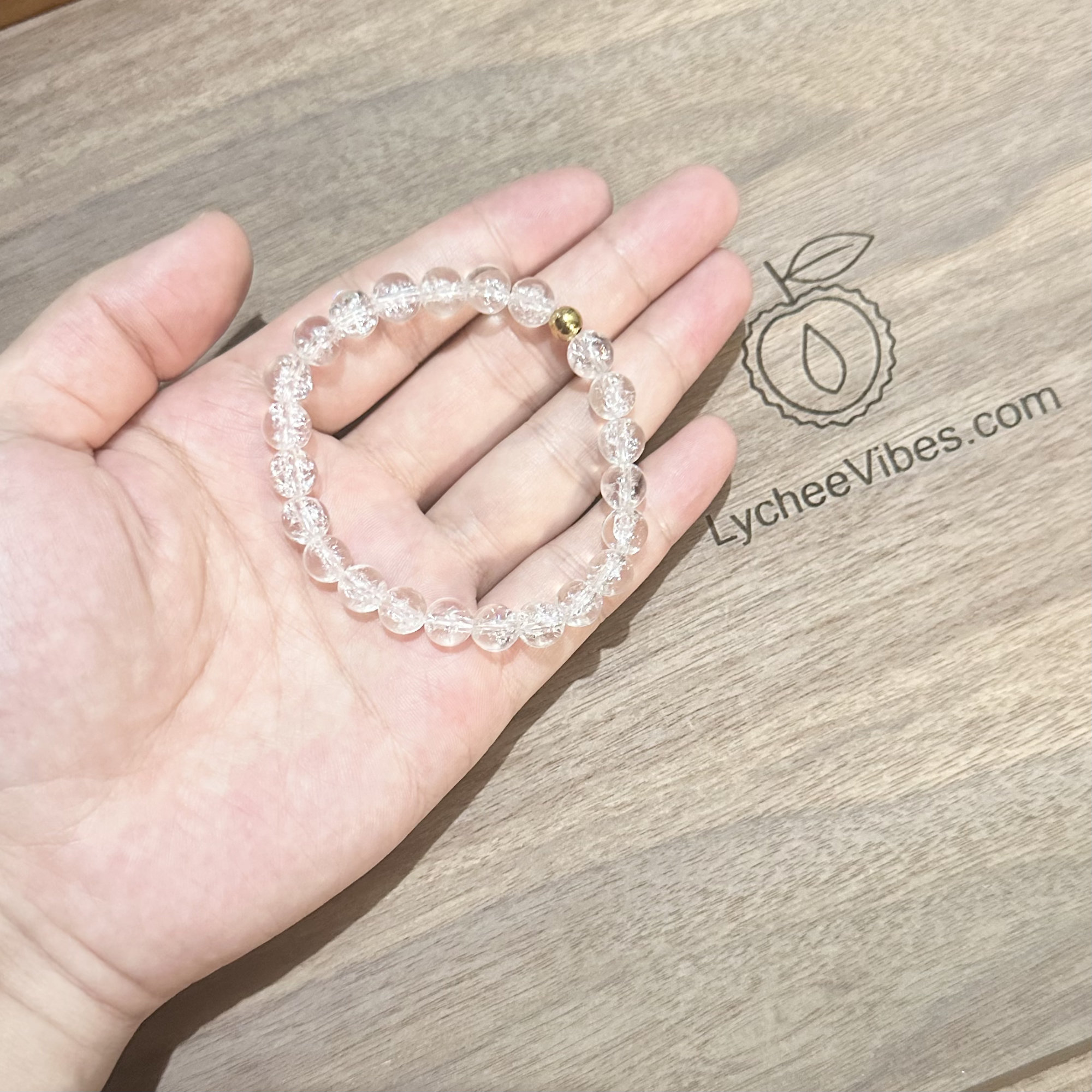
Its beads often appear icy, sparkling, and almost filled with tiny threads of light. When viewed from different angles, the internal pattern can catch the light in beautiful ways, making each bead look slightly different.
But what creates this unique appearance?
And are those internal lines something to be worried about?
The answer begins with understanding how Crackle Quartz is made.
What Is Crackle Quartz?
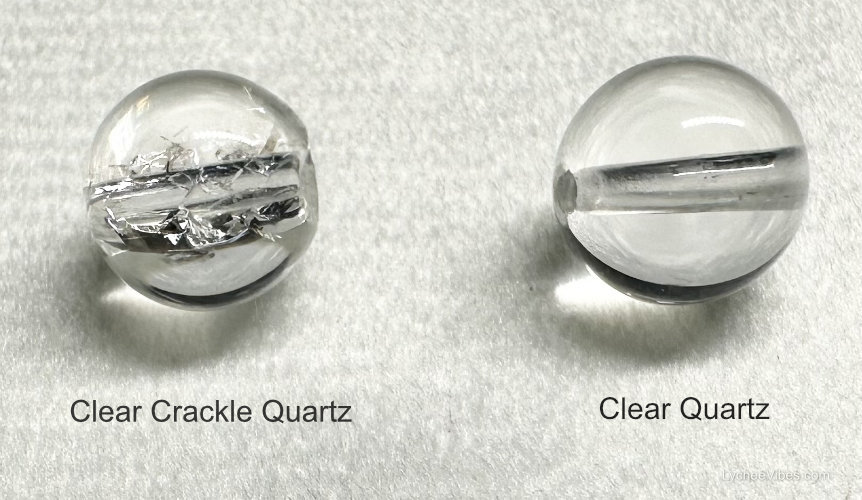
Crackle Quartz is created by intentionally treating crystal material to produce a network of fine internal fractures.
These fractures are responsible for the characteristic crackled appearance inside the bead. When light passes through the fractured areas, it can reflect and scatter in different directions, creating the sparkling.
The crackle pattern is not a flaw that happened by accident.
It is part of the design.
Because the internal structure is intentionally altered during processing, every bead can have its own unique pattern. Some beads may have more visible fractures and stronger flashes of light.
This natural variation is part of what makes a Crackle Quartz bracelet visually interesting.
Why Does Every Bead Look Different?
No two Crackle Quartz beads need to look exactly alike.
The density, direction, and visibility of the internal fractures can vary from bead to bead. Some may appear relatively clear with only a few delicate lines, while others may have a much more pronounced crackled effect.
This means that even bracelets made from the same material can have slightly different visual details.
You may notice:
Fine hairline patterns inside some beads
More visible crackled areas in others
Different levels of transparency
Different ways the beads catch and reflect light
Rather than seeing these differences as imperfections, they can be appreciated as part of the character of Crackle Quartz.
The Sparkle Comes From Within
One of the most distinctive features of Crackle Quartz is the way it interacts with light.
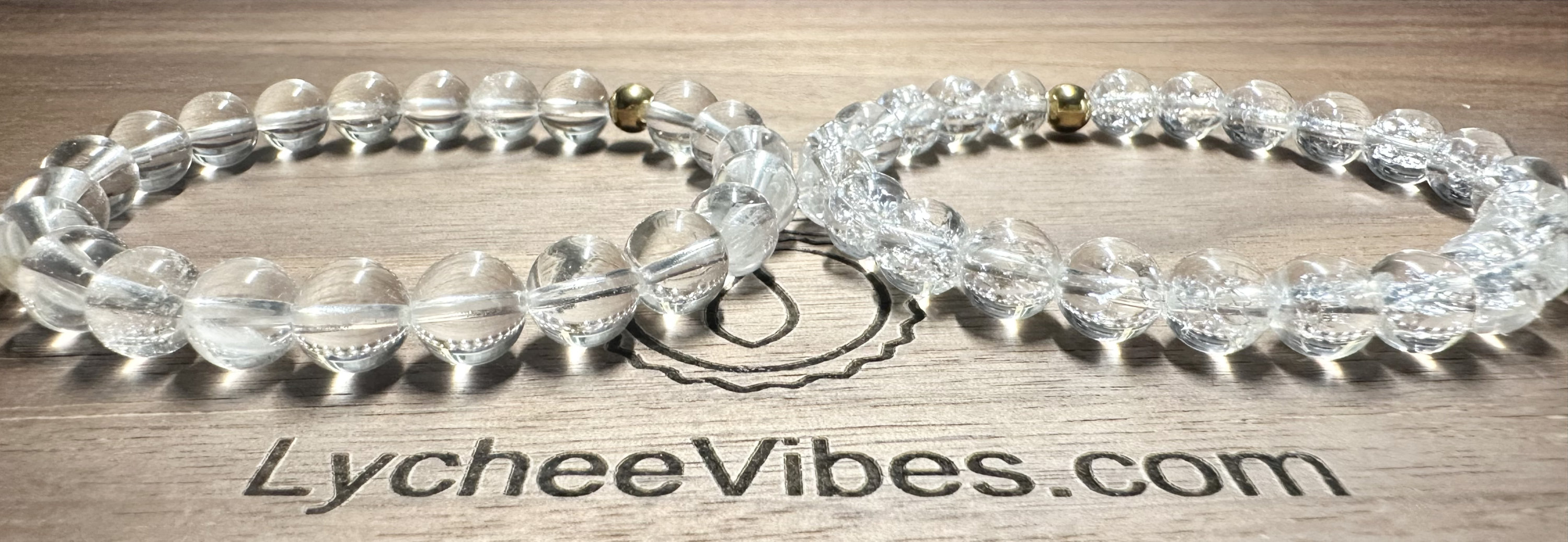
As light enters the bead, the internal fractures create additional surfaces for light to reflect and scatter. This can produce tiny flashes and a frosted, crystalline appearance.
The effect can change depending on:
The angle of the light
The viewing angle
The amount of internal fracturing
The transparency of the bead
This is why a Crackle Quartz bracelet sparkles so beautifully under indoor lights or in natural outdoor light.
The sparkle is created by the structure inside the bead — not simply by its surface.
Why Does Crackle Quartz Need Extra Care?
The same internal structure that gives Crackle Quartz its distinctive appearance also means it should be handled with a little more care than a solid, untreated-looking bead.
The intentional internal fractures can make the material more vulnerable to impact, pressure, strong vibration, and sudden temperature changes.
That doesn't mean Crackle Quartz is overly fragile—just a little care goes a long way.
How to Care for Crackle Quartz
Avoid Hard Impacts
Try not to drop the bracelet or strike the beads against hard surfaces.
Repeated impacts may cause existing fractures to become more pronounced or may damage the bead.
Skip Ultrasonic Cleaners
Ultrasonic cleaning uses strong vibrations and is not recommended for Crackle Quartz.
For a bracelet with intentionally fractured beads, gentle cleaning is the safer choice.
Avoid Sudden Temperature Changes
Keep your bracelet away from extreme heat, steam, and rapid changes between very hot and very cold environments.
Sudden temperature changes can place additional stress on materials with an internally fractured structure.
Avoid Direct Pressure
Do not squeeze, bend, or place heavy pressure directly on the beads.
When storing or packing the bracelet, avoid placing heavy objects on top of it.
Clean Gently
If your bracelet needs cleaning, use a soft, dry cloth or a slightly damp cloth.
Avoid abrasive materials and aggressive cleaning methods.
After wiping, allow the bracelet to dry naturally before storing it.
A Little Care Goes a Long Way
Crackle Quartz is special because its beauty comes from something happening inside the bead.
The fine internal fractures create the icy texture, the flashes of light, and the distinctive crackled appearance that makes each bracelet slightly different.
So if you notice delicate lines inside your Crackle Quartz beads, don't immediately think of them as damage.
The crackled pattern is part of the story of the material.
And because that story is intentionally created through processing, treating your bracelet gently is one of the simplest ways to help preserve its appearance.
A Final Note
Crackle Quartz reminds us that beauty does not always come from perfect uniformity.
Sometimes, it comes from the details within.
Every bead can carry a slightly different pattern. Every angle can reveal a different reflection. And every small variation becomes part of the finished bracelet.
The delicate crackle effect is what gives Crackle Quartz its distinctive sparkle. Treat it gently, and let the details within remain part of its charm.